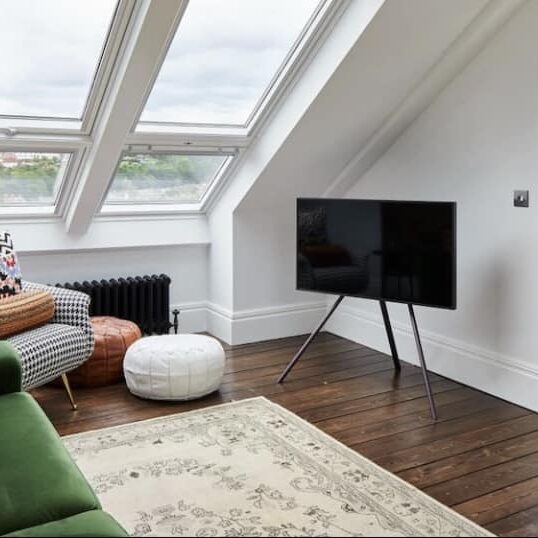
If you’re thinking about converting your loft, one of the first questions you’ll have is whether your home is actually suitable. The good news is that many properties across Nottingham and Derby can be converted, but there are a few key factors that determine what’s possible.
Understanding these early on can save time, set realistic expectations, and help you move forward with confidence. Below is a simple but practical checklist to help you assess your loft before speaking to a specialist.
Key Factors That Determine If Your Loft Can Be Converted
The suitability of your loft comes down to a combination of height, structure, space, and access. While no two homes are the same, these are the main things we look at when assessing a property.
Ceiling height is usually the first and most important factor. As a general rule, you’ll need around 2.2 metres of head height from the floor to the highest point of the roof. This allows enough space to create a comfortable and usable room once insulation and flooring are added. If your loft is slightly lower than this, there may still be options, but it could require additional structural work.
The structure of your roof also plays a big role. Older homes tend to have what’s known as a “cut roof,” which is typically easier to convert. Newer properties often use trussed roofs, which include more structural supports and may require alterations to open up the space. This doesn’t mean they can’t be converted — just that the design may be slightly more complex.
Available floor space is another key consideration. Even if your loft looks large, the usable space may be reduced once you account for sloping ceilings and the placement of stairs. A well-designed layout can make a huge difference here, which is why it’s worth exploring options like a dormer loft conversion if you need additional headroom and space.
Access is often overlooked but essential. Building regulations require a safe and permanent staircase, which needs to fit within your existing home layout. This can influence both the design and feasibility of the conversion.
What If My Loft Doesn’t Meet These Requirements?
One of the biggest misconceptions is that if your loft isn’t “perfect,” it can’t be converted. In reality, there are often solutions available depending on your budget and goals.
For example, if head height is limited, it may be possible to adjust the roof structure or explore different conversion types. A Velux loft conversion can work well in spaces where the existing structure is suitable, while more extensive options like dormers can create additional usable room.
In some cases, structural changes such as raising the roof or lowering the ceiling below may be considered, although these are more involved projects. The key is understanding what’s possible for your specific property rather than ruling it out too early.
Planning Permission and Regulations
Most loft conversions fall under permitted development, meaning you won’t need full planning permission. However, this depends on your property type and location. For example, homes in conservation areas or with certain restrictions may require approval.
Regardless of planning, all loft conversions must comply with building regulations. These cover important aspects such as structural integrity, fire safety, insulation, and access. Working with an experienced team ensures everything is handled correctly from the start.
Why a Professional Assessment Matters
While this checklist is a great starting point, the only way to know for certain what’s possible is to have your loft assessed by a specialist. Every home is different, and small details can have a big impact on design and cost.
At Top Mark Conversions, we carry out detailed assessments to give you a clear understanding of your options. Whether your loft is ready to convert or needs a more creative approach, we’ll guide you through the best solution for your space.
You can learn more about the different options available on our loft conversions page, or if you’re ready to take the next step, visit our contact page to arrange a consultation.
Final Thoughts
Most lofts have more potential than homeowners realise. Even if your space isn’t immediately suitable, there are often ways to adapt and make it work. By understanding the key factors and getting the right advice early on, you can turn an unused loft into a valuable and functional part of your home.