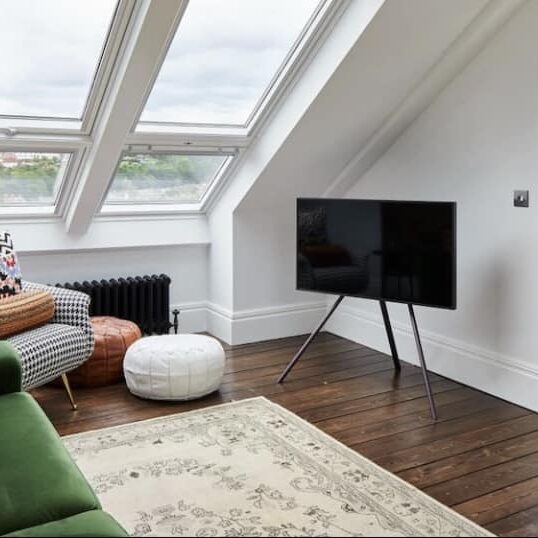
If you’re considering a loft conversion, one of the first decisions you’ll need to make is which type of conversion is right for your home. Two of the most popular options are Velux (rooflight) conversions and dormer conversions. While both can transform your loft into a functional living space, they offer very different results in terms of cost, space, and overall impact.
Understanding the differences between these two options will help you make an informed decision based on your property, your budget, and how you plan to use the space.
What Is a Velux Loft Conversion?
A Velux loft conversion, sometimes referred to as a rooflight conversion, is the simplest and most cost-effective way to convert a loft. It works within the existing roof structure, meaning no major alterations are made to the shape of your roof.
Instead, windows are installed into the slope of the roof to bring in natural light, and the internal space is adapted to create a usable room. Because the structure remains largely unchanged, this type of conversion is usually quicker to complete and less disruptive overall.
You can explore this option in more detail on our Velux loft conversions page.
What Is a Dormer Loft Conversion?
A dormer loft conversion involves extending part of the roof outward to create additional headroom and floor space. This extension forms a box-like structure that sits on the slope of the roof, significantly increasing the usable area inside the loft.
Dormer conversions are one of the most versatile options, allowing for larger rooms, better layouts, and the possibility of adding features such as en-suites or built-in storage.
If you’re looking to maximise space, you can learn more about this option on our dormer loft conversions page.
Key Differences Between Dormer and Velux Conversions
The main difference between these two types of conversion comes down to how much they change the structure of your roof and how much space they create as a result.
A Velux conversion is ideal if your loft already has sufficient headroom and you’re looking for a more straightforward, budget-friendly solution. Because it doesn’t extend the roof, the available space is limited to what already exists, which can mean dealing with sloped ceilings and reduced usable floor area.
In contrast, a dormer conversion is designed to maximise space. By extending the roof outward, it creates vertical walls and a flat ceiling in part of the loft, making the room feel much larger and more practical. This makes it a popular choice for homeowners who want to create a full bedroom, office, or living area.
Cost Considerations
Cost is often a deciding factor when choosing between a dormer and a Velux conversion. Velux conversions are typically more affordable because they involve less structural work and can be completed more quickly.
Dormer conversions, on the other hand, require more extensive construction, which increases the overall cost. However, they also provide significantly more usable space, which can make them a better long-term investment depending on your goals.
When weighing up cost, it’s important to consider not just the initial spend, but the value and functionality you’ll gain from the finished space.
Planning Permission and Regulations
Both Velux and dormer loft conversions often fall under permitted development, meaning full planning permission may not be required. However, this depends on factors such as the size of the extension, the type of property, and your location.
Regardless of the type of conversion you choose, building regulations will always apply. These ensure the structure is safe, energy efficient, and suitable for long-term use.
Which Option Is Right for Your Home?
The right choice depends on your priorities and the characteristics of your property.
If you’re looking for a cost-effective solution and your loft already has good headroom, a Velux conversion can be an excellent option. It’s simpler, quicker, and less disruptive, making it ideal for straightforward projects.
If your goal is to create as much space as possible, or if your existing loft feels limited, a dormer conversion is often the better choice. The additional headroom and floor space can completely transform how the loft is used, making it feel like a natural extension of your home rather than just an adapted space.
For many homeowners, the decision ultimately comes down to balancing budget with long-term usability.
Getting the Right Advice
Every home is different, and what works for one property may not be the best solution for another. That’s why it’s important to get tailored advice based on your specific layout, structure, and goals.
At Top Mark Conversions, we help homeowners choose the most suitable option for their space, ensuring the final result meets both practical needs and budget expectations. You can explore all available options on our loft conversions page or get in touch via our contact page to arrange a consultation.
Final Thoughts
Both dormer and Velux loft conversions offer great ways to unlock the potential of your home, but they serve different purposes. A Velux conversion keeps things simple and cost-effective, while a dormer conversion focuses on maximising space and flexibility.
By understanding the differences and thinking about how you want to use your new space, you can choose the option that delivers the best result for your home both now and in the future.